
Bridge Assessments
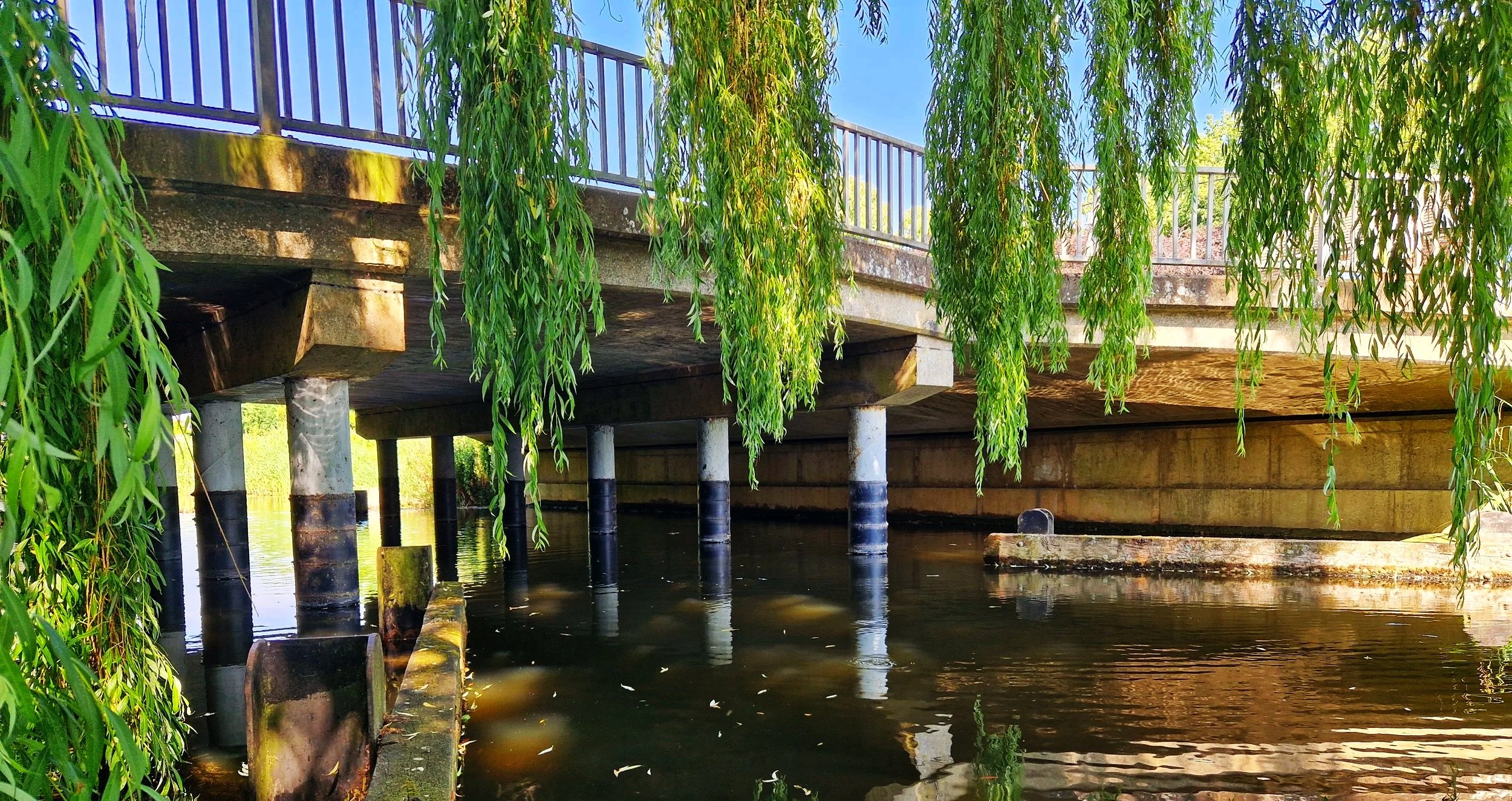
Bridges are some of the most critical pieces of civil infrastructure in our society, yet their importance is often totally disregarded by the nature they seek to bypass.
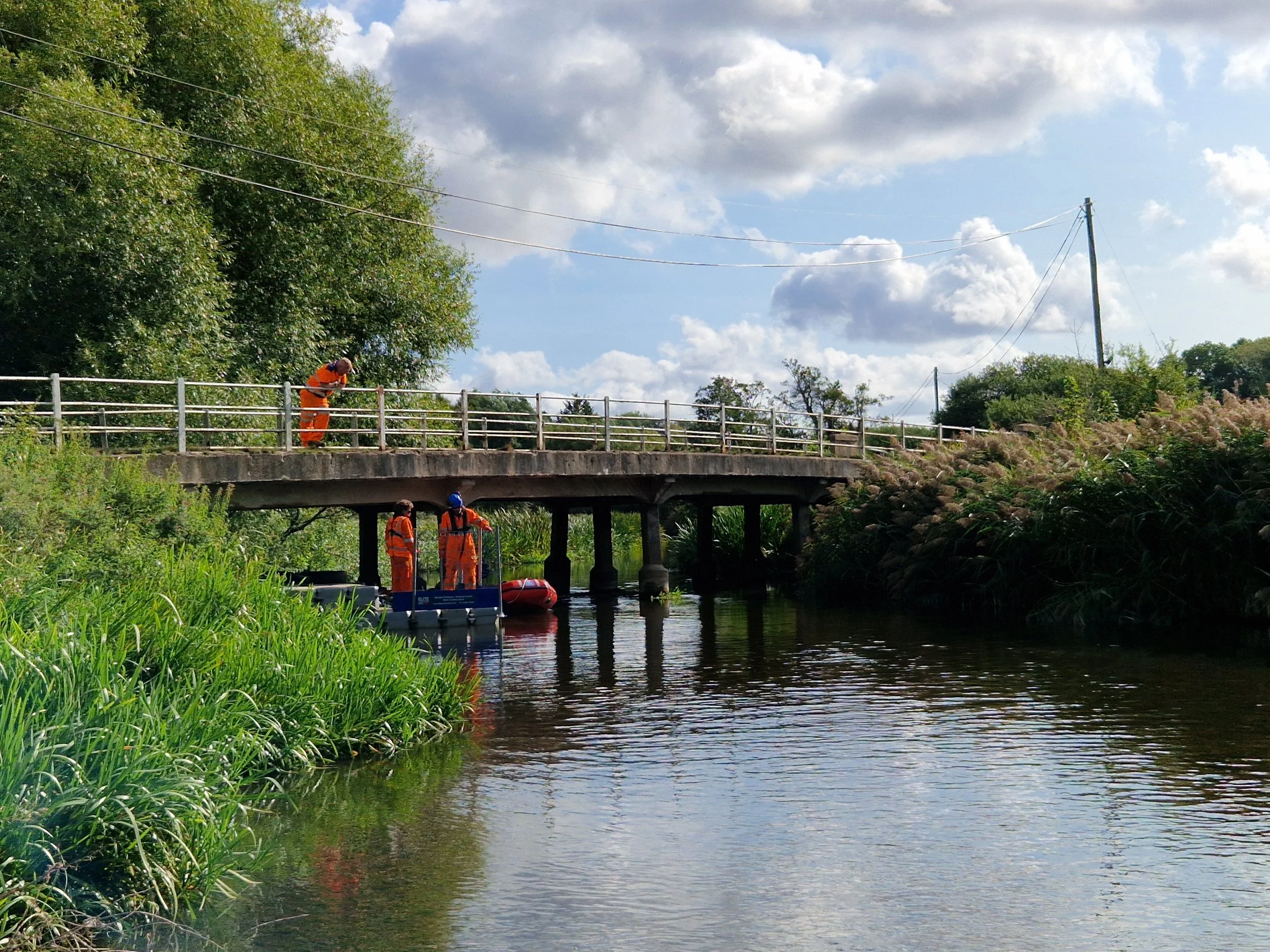
If your bridge requires a scour risk assessment, Exo are here to help. Using our expert knowledge of bathymetry, hydrology, GPS and sediment surveying, we can perform both Level 1 and Level 2 scour risk assessments in accordance with CS 469.
These assessments can be conducted in tandem with any ecology surveys, water quality surveys, sediment surveys and permit and/or license requirements. This ensures that your project receives all the relevant solutions in a comprehensive and efficient manner.
Case Studies
-
In early 2025, Exo Environmental fulfilled the role of Ecological Clerk of Works (ECoW) for Norfolk County Council to oversee the replacement of the damaged Moorgate footbridge over the River Bure near Blickling Hall.
An ECoW is an essential part of any construction project, providing expert advice and assistance to project managers to make sure they keep in line with environmental legislation and licence conditions
This project specifically required an ECoW due to the sensitive nature of the Bure’s chalk watercourse and the protected species that inhabit it too, including water voles and otters.
One of our team was on-site each day during the works to monitor for any indication that these protected species may be present. We also monitored the dissolved oxygen levels in the river, using a YSI EXO 3 multi-parameter sonde.
After two weeks, the works were successfully completed, with no damage to the chalk river or the species which inhabit it. Thankfully, the new footbridge is now open to the public, meaning local walkers will no longer have to take a two-mile detour!
-
In Summer 2025, Exo Environmental were appointed by Norfolk County Council to undertake a Preliminary Ecological Assessments (PEA) at a number of bridges across the county as they carry out essential inspection and investigatory works.
These ranged from sites just outside Norwich in Honingham, near the Suffolk border at Starston, to right out west in the Fens at Nordelph and Stow Bardolph.
A PEA ascertains if there are any immediate species or habitats that could be affected by the works, this includes protected and designated features. If there is potential for the works to cause an impact to any ecological consideration, whether that be bats, badgers or breeding birds, a more in-depth survey on that particular species will be required.
Each assessment started with a site visit by one of our qualified ecologists on the Exo team, followed by the compilation of a bespoke report for each bridge.
In some instances, the assessment found little risk to species disturbance and simply gave a list of recommendations, such as carrying the work out outside of the bird breeding season and strimming vegetation around the works to discourage habitation.
On the other hand, other sites necessitated a more detailed look. In most cases, this involved a return by night to carry out bat emergence surveys using thermal static cameras and echo sounding devices to record any emergence, foraging or any other activity.
This data was then analysed after the survey and a report written up detailing the findings and any potential next steps.
-
As part of our wider campaign of preliminary ecological assessments on a number of bridges for Norfolk County Council (NCC), Exo Environmental provided an Ecological Clerk of Works (ECoW) for essential inspection and investigation works for a bridge over the River Wensum in Ringland.
Following the initial PEA and further detailed inspections, it was concluded that the works required an ECoW because of the presence of housemartins nesting in the bridge. This was further compounded by the fact that the bridge lay with a Site of Special Scientific Interest (SSSI) designation.
Therefore, one of our team was on-site each day, noting any fauna present and monitoring the works activities to ensure that they keep in line with environmental conditions and licence conditions. For example, this included liaising with the works foreman to certify that concrete wash water is taken from the site and disposed of in the correct manner.
By the end of the week, all activities had concluded without any damage or disturbance to the protected housemartins or any other species or habitats. This was outlined in a full ECoW report provided to the NCC.