
Habitat Restoration

Here at Exo Environmental, we have extensive experience in conducting surveys associated with habitat restoration.
A range of surveying has been undertaken throughout the UK which has provided vital information to national bodies such as Natural England, the Environment Agency and the Broads Authority to inform them on the best practices to maintain and restore important habitats.
Providing solutions via management, soft engineering and through experimental deployment of the newest designs in restoration, Exo Environmental has been involved with projects throughout the offshore, terrestrial and intertidal environments, everything from peatland rewetting restoration to oyster reefs in the North Sea.
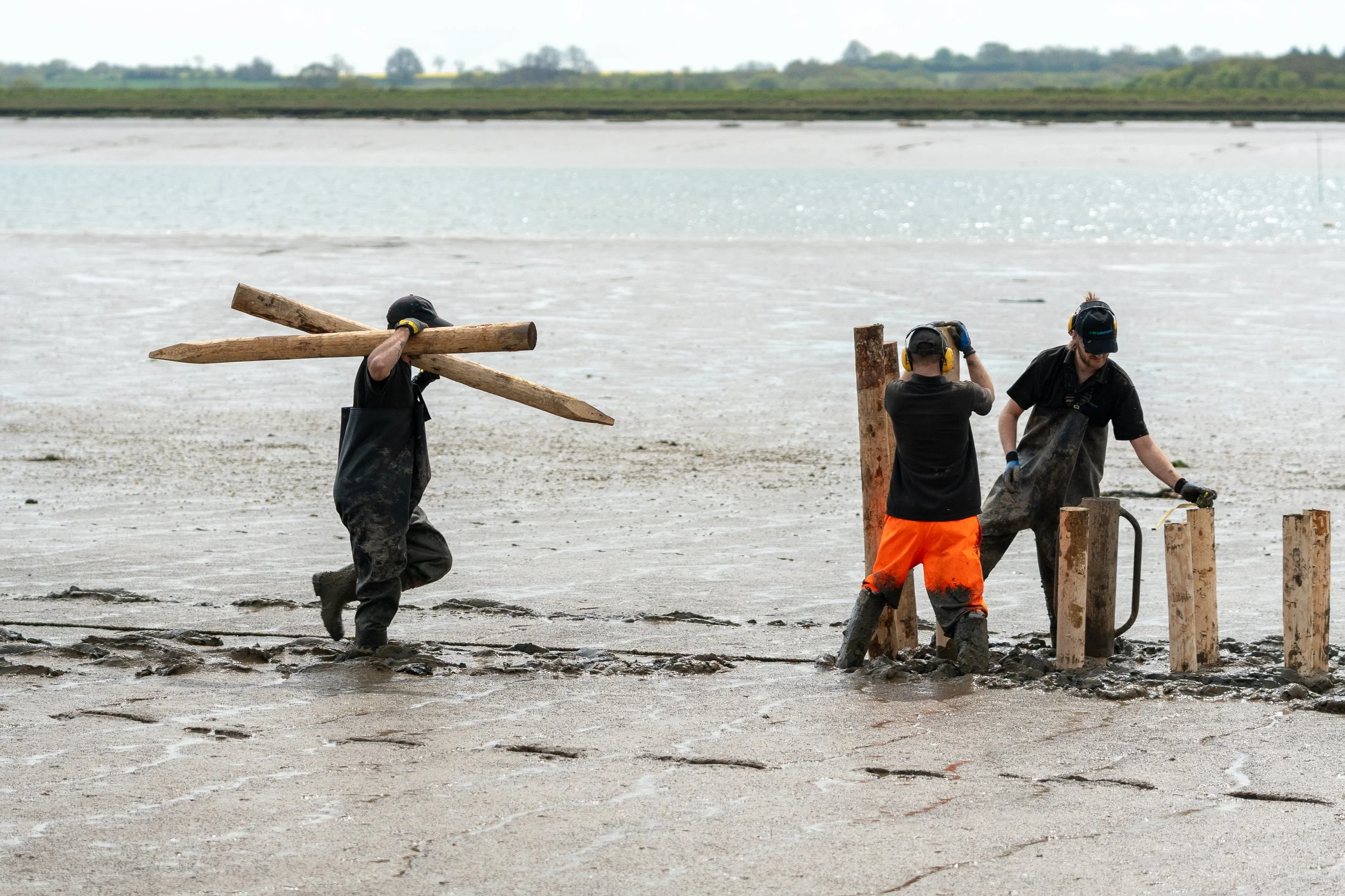
Brushwood Barrier in progress at Fingringhoe Ranges.
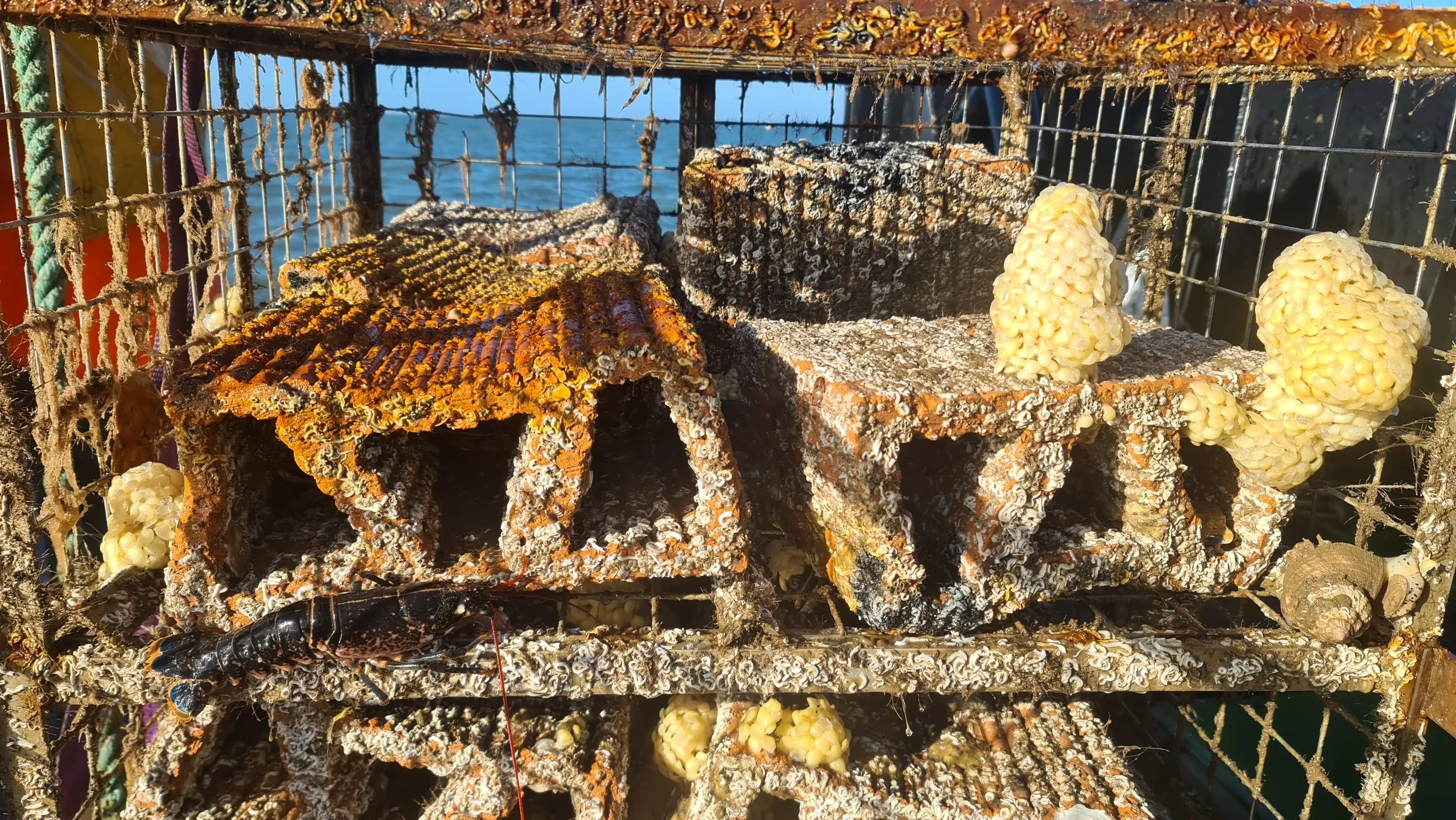
Oyster Heaven Mother Reef bricks.
CASE STUDIES:
-
We worked with the organisation Oyster Heaven to launch an oyster restoration project off the North Norfolk Coast. This project, labelled ‘Luna’, will take place at Norfolk Seaweed’s farm, located 4.5km due north of Blakeney Point.
To lay the groundwork, Exo conducted a number of surveys, including drop-down video, multibeam bathymetry and flow monitoring. We also secured all the relevant permissions and licences from the Marine Management Organisation (MMO), Natural England (NE), and the Crown Estate.
Historically, native oysters (O. edulis) thrived on firm silty sand or gravel containing shells and stones. To replicate these conditions, the project will utilise Oyster Heaven’s Mother Reefs—clay bricks specially designed for larval oysters to attach to.
The restoration process, scheduled to span from this summer through 2027, aims to deploy an impressive 4 million oysters at each site. While this number may seem excessive, the natural mortality rate for this species is unfortunately high at about 75%. To counter this, the project is accounting for an even more conservative 90% mortality rate, ensuring the best possible chance of reaching the ultimate goal: establishing a self-sustaining population of 400,000 breeding adults.
To assess mortality rates and reef conditions, two pilot cages containing 12 mother reefs each have suspended above the seafloor at each site. These pilot reefs allow us to track survival rates, environmental interactions, and logistical challenges before scaling up to full deployments.
-
As part of the EU Interreg Using Sediment as a Resource (USAR) project, Exo Environmental supported Brightlingsea Harbour Commissioners in their application for a marine licence to dredge the harbour and re-use the sediment to restore a series of borrow pits.
These pits were originally dug out in decades gone by in the surrounding saltmarsh to build up the sea wall defence. However, modern research has demonstrated that saltmarsh already provides an excellent level of natural flood defence, as well as boasting high biodiversity.
Exo conducted numerous environmental studies to provide the Marine Management Organisation (MMO) with relevant data to support the application. These included benthic ecological surveying, water flow and modelling, water quality monitoring before, during and after the dredging campaign to monitor any change, as well as vegetation and bird surveys.
Following the successful licence application, Exo acted as primary consultant and ecological clerk during monitoring of the project to ensure the appropriate environmental protection measures were put in place.
Several subsequent dredging campaigns were conducted, which helped to fill the pits with dredged material. After time this material consolidated, and natural seral succession took place with pioneer salt marsh species beginning to colonise it. Vegetation surveys conducted throughout the project lifetime categorised the change from bare mud to saltmarsh communities, helping to document and evidence the benefits of restoring saltmarsh habitats.
-
In 2024, Exo were contracted by Landmarc to devise a plan to regenerate retreating saltmarsh habitat at the Ministry of Defence owned Fingringhoe Ranges in Essex.
Following successful material trials on-site in the spring of 2024, the methodology began to take shape. We settled on a combination of brushwood fencing and coir matting, both of which are materials we have previously deployed in other successful coastal regeneration projects. These materials work in tandem to encourage sediment deposits, with the brushwood reducing the tidal energy of incoming waves and the coir providing an excellent substrate to trap the silt and sand. The advantage of both materials is that they are natural and will biodegrade after they become submerged beneath the regenerating saltmarsh.
The full-scale installation of brushwood fencing and coir matting began just after the Easter Weekend 2025. Two members of the Exo team arrived a day early to oversee delivery of the materials and to map out the installation sites with a GPS. A full team of 6 then carried out the project over the next 4 days, working around the rising and falling tides and battling through some particularly treacherous mud!
Now that the installation is complete, Exo will continue to monitor the site over the coming years, assessing the structural integrity of the fencing and surveying changes in the sediment and vegetation to evaluate the success of the project.