
Restoring Native Oyster Reefs in the North Sea
For centuries, native oyster reefs (Ostrea edulis) covered an estimated 20-30% of the North Sea’s seabed, serving as vital ecosystems that filtered water, balanced nutrient and sediment levels, as well as providing habitats for an astonishing 466 macrofaunal species. These reefs also reduced wave energy and trapped sediments, playing a crucial role in coastal protection.
Recognizing the urgency of this decline, the Oslo-Paris Commission (OSPAR) has listed O. edulis as an endangered species. This has driven a growing ambition among NGOs and marine conservationists to restore native oyster populations and their critical ecosystems.
In a groundbreaking effort, Exo Environmental has collaborated with marine conservation organisation Oyster Heaven to launch an oyster restoration project off the North Norfolk Coast.
This project, labelled ‘Luna’, will take place at Norfolk Seaweed’s farm, located 4.5km due north of Blakeney Point. We selected this site due to our knowledge of the area from previous work, its prior possession of the relevant marine licences and the efficiency and cost effectiveness it provides through multiuse alongside the seaweed farm.
To ensure the best possible conditions for O. edulis settlement, Exo conducted a series of preparatory surveys at Luna between May and June 2024. This included:
● Drop-down video surveys at nine locations using Day grab samplers to analyse the seabed’s substrate and sediment composition. The findings at both sites revealed a thin layer of sand over homogeneous clay with shell fragments and pebbles throughout, all ideal conditions for oyster settlement.
● Multibeam bathymetry survey at Luna to compare seabed elevations against August 2023 data, which confirmed no significant sediment movement.
● Flow monitoring using a Valeport 106 device to help assess water movement and environmental conditions.
Necessary permissions and licences from the Marine Management Organisation (MMO), Natural England (NE), and the Crown Estate were also applied for.

Historically, O. edulis thrived on firm silty sand or gravel containing shells and stones.
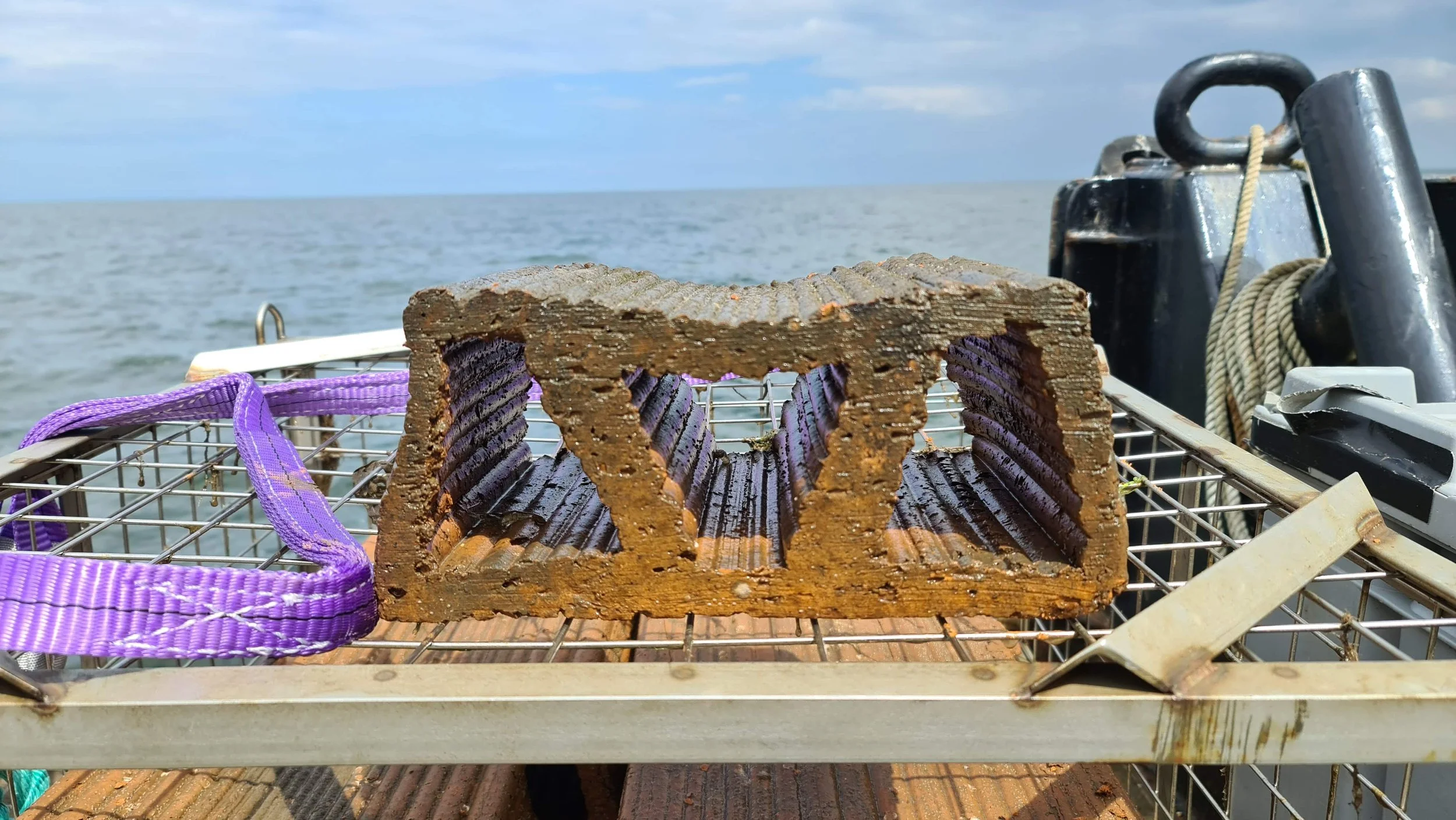
To replicate these conditions, the project will utilise Oyster Heaven’s Mother Reefs—clay bricks specially designed for larval oysters to attach to.
These bricks can be produced using traditional brickwork manufacturing methods, ensuring a scalable and sustainable solution for oyster restoration.
To maximize settlement success, larval oysters will first colonize the mother reefs in a hatchery before deployment at sea. This approach ensures a high settlement density and gives the young oysters a strong start.
The restoration process, scheduled to span from this summer through 2027, aims to deploy an impressive 4 million oysters at each site. While this number may seem excessive, the natural mortality rate for this species is unfortunately high at about 75%. To counter this, the project is accounting for an even more conservative 90% mortality rate, ensuring the best possible chance of reaching the ultimate goal: establishing a self-sustaining population of 400,000 breeding adults.
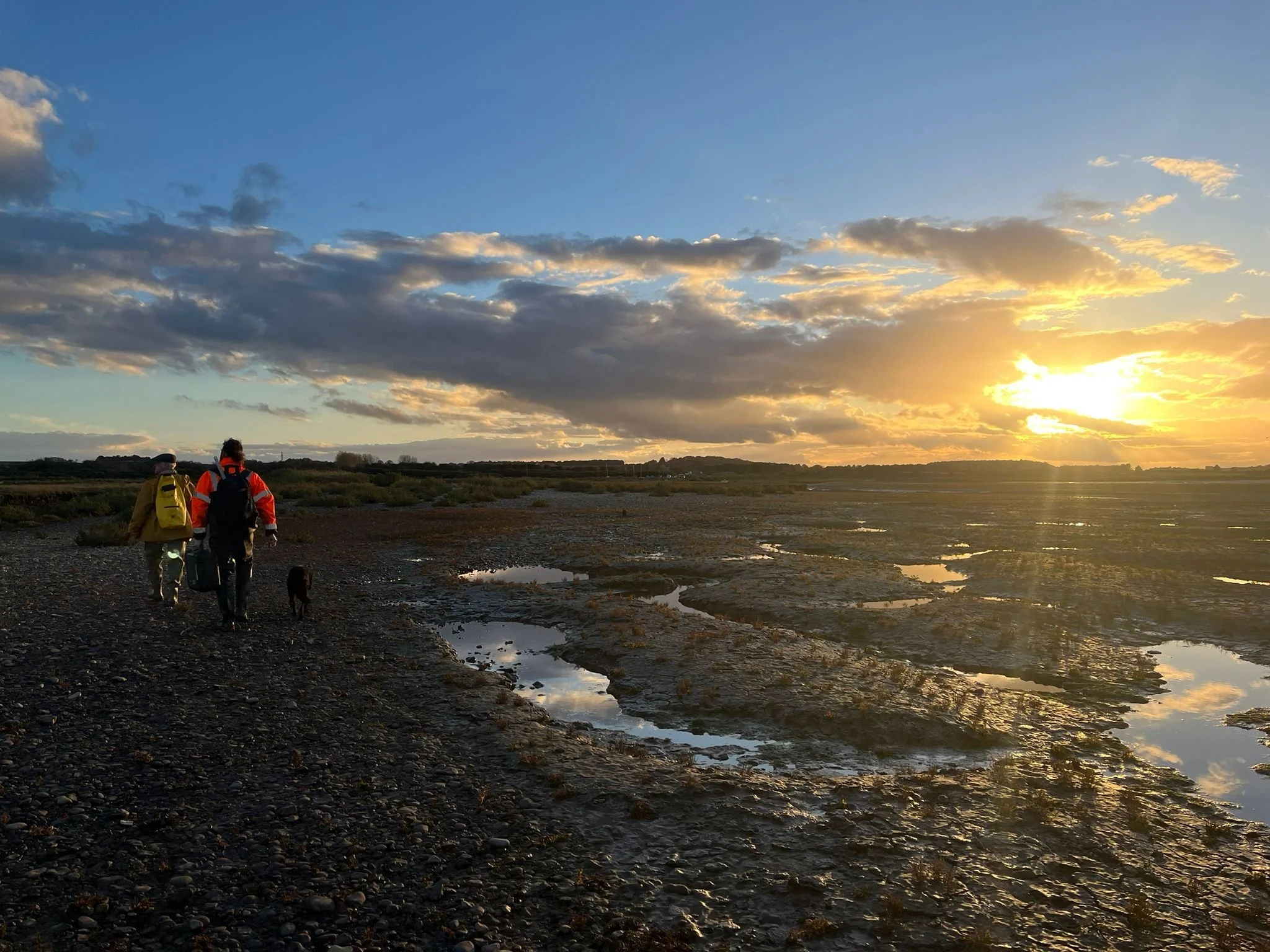
The long-term vision is to initiate a ‘virtuous circle,’ where adult oysters eventually provide a natural settlement base for their offspring.
Over time, this will eliminate the need for artificial mother reefs, as the reefs will become self-sustaining. The clay bricks will gradually disintegrate, merging with the clay seabed and leaving behind a thriving oyster ecosystem.
To assess mortality rates and reef conditions, two pilot cages containing 12 mother reefs each have suspended above the seafloor at each site. These pilot reefs allow researchers to track survival rates, environmental interactions, and logistical challenges before scaling up full deployments.
This ambitious restoration project represents a significant step towards reviving the North Sea’s lost oyster reefs. By combining innovative restoration techniques with thorough scientific research, Oyster Heaven, Exo and Norfolk Seaweed are paving the way for a more resilient and biodiverse marine environment. If successful, this project could serve as a model for future large-scale oyster restoration efforts across Europe and beyond.
With time, dedication, and continued collaboration, the dream of seeing Ostrea edulis thrive once more in the North Sea could soon become a reality.
If you would like to find out more about the types of habitat restoration we work with, please get in touch.