
Fingringhoe Firing Ranges-Large Scale Nature-Inclusive Saltmarsh Restoration
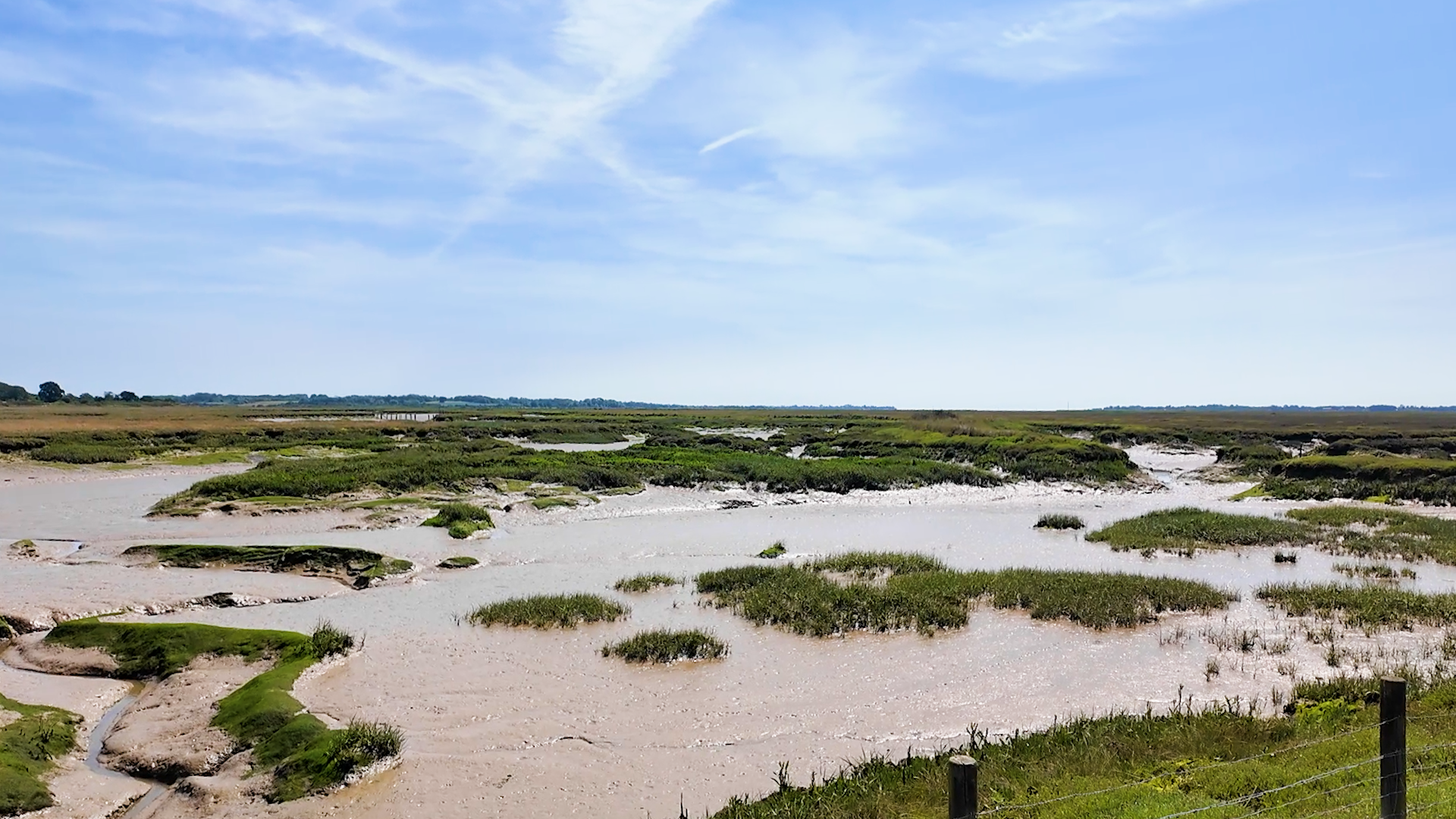
Fingringhoe Firing Ranges - Saltmarsh
Coastal erosion is not only an issue in towns and cities but also affects MOD operational areas. Key to national defence and security, protecting MOD assets is seen as a priority infrastructure improvement program by the UK government. One such example of where coastal dynamics are threatening the integrity of MOD infrastructure is at Fingringhoe Ranges. Located on the banks of the River Colne in Essex, this range is at risk of flooding due to the erosion of mudflats and, in particular, saltmarsh in front of the hard engineered seawall. The loss of saltmarsh across the east coast is a key challenge that coastal communities and practitioners face when planning resilience to climate change. Saltmarsh is a unique coastal blue marine habitat, consisting of salt tolerant halophytic flora, forming an interconnected mosaic of hypersaline pools, bare mudflat and flowering carpets, supporting rare and vulnerable invertebrates and birds, creating a biodiversity hotspot. As well as this, it performs a flood risk mitigation ecosystem service by absorbing wave and tidal energy, protecting our vulnerable coastline communities.
Historical Effects
Saltmarsh habitat has been seriously threatened over the past centuries. Since the 1860s, it is estimated that 85% of England’s saltmarshes have been lost. This is due to the historic demand for farmland leading to the ‘reclamation’ of saltmarshes and further losses due to erosion from more frequent and more powerful storms. Saltmarshes are also subject to coastal squeeze, where the construction of seawalls too close to coastlines prevents the natural inland migration of saltmarsh in response to sea level rise.
Exo Environmental’s Involvement
Since our inception in 2014, Exo Environmental have focussed on solutions to restore blue carbon marine habitats, including saltmarsh. In 2017 Exo worked on behalf of Brightlingsea Harbour Commissioners on the EU Interreg project USAR (Using Sediment as A Resource). This project focussed on the circular economy and waste hierarchy and used dredged material to restore former saltmarsh on the River Colne. After one season we observed natural pioneer colonisation of salicornia, as the sediment level increased. In 2022 Exo also installed a series of brushwood fences on Cobmarsh and Packing Shed Island off the coast of Mersea Island on the River Blackwater. These structures were designed to prevent planned sediment recharge from Harwich from smothering the fragile saltmarsh ecosystem. The positioning and height of the structures required careful consideration and study of in situ hydrodynamics as well as collaboration with the dredging contractor and local stakeholders.
As a result of these previous projects, Exo has built up a deep and extensive knowledge of saltmarsh recovery and regeneration methods in Essex and the wider east coast. To remedy the increasing flood risk at Fingringhoe, Landmarc Support Services (Landmarc) contacted Exo Environmental to devise a plan to regenerate the saltmarsh habitat along the perimeter of the ranges by using brushwood fences and coir mats.
By working together, Landmarc, the Defence Infrastructure Organisation (DIO) and Exo Environmental decided to run a series of material trials on Fingringhoe Ranges in the spring of 2024. The trial was to test the feasibility of different materials and methodologies for a period of time before committing to a larger scale project. The trial enabled changes to be made to the methodology, and baseline surveys of the site to be undertaken, including ecology and hydro-geomorphological studies.
After a successful trial period, during which the project had a positive benefit in terms of trapping sediment and promoting saltmarsh pioneer succession, a large-scale installation project was implemented. Brushwood and coir mats were installed on the mudflats by Exo in Spring 2025 along targeted areas of coastline most at risk from erosion. The natural materials help trap sediment in tidal conditions, and increase the height of the mudflat, encouraging natural seral succession of halophytic pioneer species (such as glasswort and cord-grass). After first establishment, the roots of these plants hold the sediment together, encouraging further deposition and providing a flexible defence to sea level rise through a positive feedback cycle.
Over time mature saltmarsh habitat develops, and through the process of growth and burial underneath layers of fine sediment, the habitat acts as a carbon sink. Such a major carbon sink in fact, that saltmarshes sequester carbon dioxide 40 times faster than forests, further demonstrating the importance of protecting these vulnerable habitats.
Installation
The day before installation was due to take place, two members of the Exo team arrived on site to oversee delivery of materials and to map out the installation sites with a GPS. The materials were delivered by Hiab lorry to strategic locations along the seawall, with further materials being floated over from nearby Brightlingsea Harbour on high tide using an Aquadock pontoon. This pontoon provided a safe and stable working platform for the team to use whilst on the mudflat, preventing exhaustion and reducing the chance of injuries occurring.
A full team of 6 then carried out the project over the next 4 days, working around the rising and falling tides. Health and safety considerations, training and recovery methods were established prior to work taking place to enable manual working on the mudflats. At the end of the project Exo had installed over 100m of brushwood and coir matting at four sites across the range.
This project exemplifies a forward-thinking approach to climate adaptation and resilience by working with natural processes (nature-based solutions). As sea levels continue to rise and storm events become more frequent and intense, nature-based interventions like saltmarsh restoration provide flexible, self-sustaining coastal defences that can evolve over time. Unlike traditional hard engineering solutions, which are often costly and can exacerbate erosion elsewhere, these low-cost environmental measures dissipate wave energy, reduce flood risk, and stabilise shorelines in a more sustainable way. The initial project at Fingringhoe considered using hard rock armour in front of the seawall to protect it from erosion, which would have cost in the region of £500,000. By utilising the method suggested by Exo, project costs were brought down by a huge £450,000, representing a 90% cost saving when compared to the alternative hard engineering approach!
Conclusion
By investing in such solutions, the project demonstrates how environmental stewardship and land management can align to deliver long-term benefits. The Fingringhoe initiative highlights how cost-effective techniques can provide robust coastal protection while simultaneously addressing biodiversity loss and contributing to climate mitigation through carbon sequestration, setting a valuable precedent for similar sites facing comparable challenges. This is a win for nature and for the MOD!
The success of the measures implemented at Fingringhoe will continue to be monitored by Exo and in collaboration with researchers from the local University of Essex. A range of different parameters will be monitored including the accretion of sediment, floral diversity and richness, the condition of the brushwood fences, the condition of the seawall and interaction between nature inclusive solutions and hard engineering and gas fluxes to quantify carbon storage rates.
This was such an exciting project to work on, and we are thrilled to continue our involvement with it post implementation and look forward to working on similar projects in the future. Nature restoration is a continuous effort and requires all facets of society to pool resources to prevent our precious ecosystems from disappearing, at Exo we are committed to continuing our efforts to restore, regenerate and create spaces for nature to thrive.